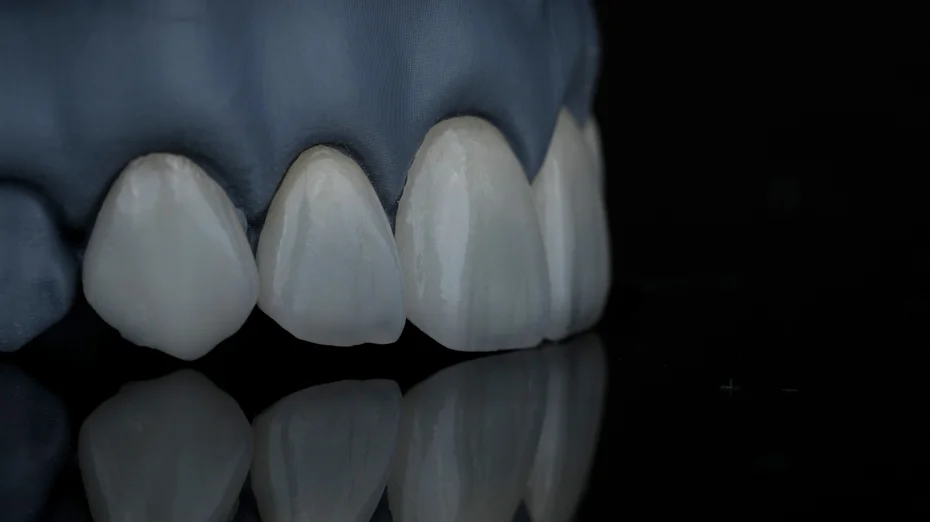
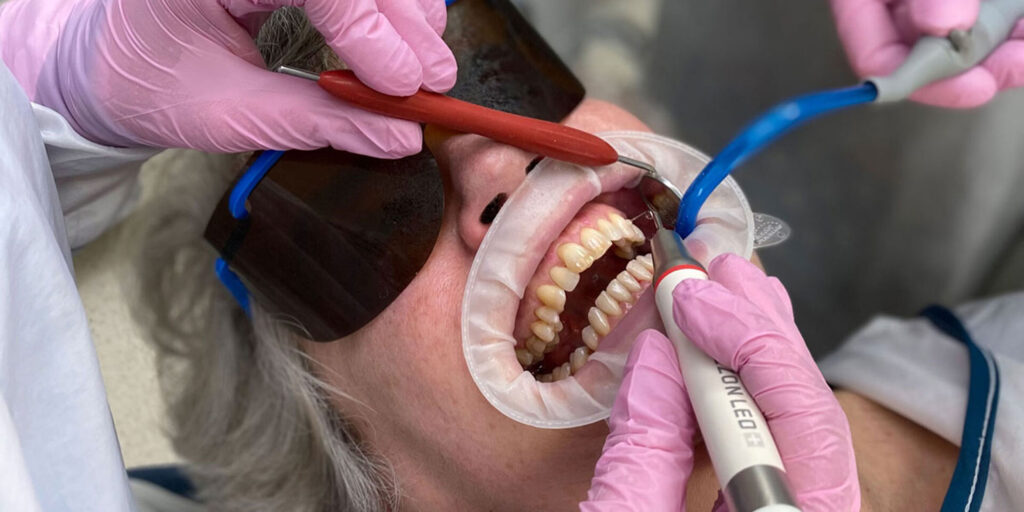
IPS e.max veneers are thin, custom-made porcelain shells that cover the front surface of teeth. They improve the color, shape, and alignment of your teeth while preserving natural tooth structure.
Benefits of IPS e.max veneers:
Restores chipped, cracked, or discolored teeth
Creates a natural, uniform smile
Preserves more tooth structure than crowns
Durable and long-lasting
Resistant to stains
Signs You Might Need Veneers
Discolored Teeth – Teeth that don’t respond to whitening.
Chipped or Worn Teeth – Minor damage affecting appearance or function.
Gaps Between Teeth – Close small gaps (diastemas) easily.
Slight Misalignment – Improve mild crookedness without braces.
Loss of Confidence – Smiling less or hiding your teeth.
How the IPS e.max Veneer Process Works
Consultation & Assessment – Your dentist reviews your goals.
Tooth Preparation – Minimal enamel is removed.
Impression & Design – Custom veneers are made in the lab.
Veneer Placement – Bonded securely to your teeth.
Final Adjustments – Checked for comfort, bite, and aesthetics.
Why IPS e.max Veneers Are a Premium Choice
Made from high-strength lithium disilicate ceramic, IPS e.max veneers combine durability, aesthetics, and precision. They mimic the translucency of natural teeth while providing strong support for chewing.
Caring for Your Veneers
Brush twice a day and floss daily
Avoid biting hard objects (ice, pens, nails)
Attend regular dental check-ups
Limit coffee, tea, or tobacco to prevent stains
Book Your Smile Transformation
At GBT Clinic by Dr. Duro, we help you achieve a beautiful, natural, and confident smile with IPS e.max veneers. Book your consultation today for a comfortable, precise, and long-lasting result.
Many people live with missing or damaged teeth longer than they should. At first, it may not feel urgent. You adjust the way you chew, you smile a little less, and over time, it becomes part of your routine.
The truth is, your mouth often gives you early signs that something is not right. The problem is that these signs can feel small in the beginning. A little discomfort when chewing. A tooth that feels weaker than before. A gap that does not seem like a big deal.
These are not things to ignore. They are often your body’s way of telling you it may be time to consider a long-term solution like dental implants.
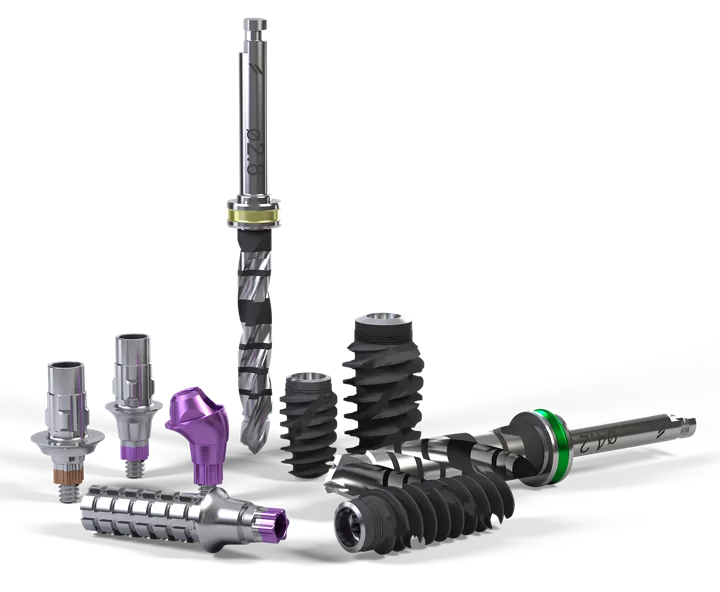
At GBT Clinic by Dr. Duro, we believe tooth replacement should not start only when the situation becomes severe. Straumann dental implants are one of the most advanced and reliable solutions available today, designed to restore both function and confidence.
If you have been unsure whether you need treatment, here are five clear signs that Straumann dental implants may be the right step for you.
1.You Have a Missing Tooth That You Have Not Replaced
Losing a tooth may not always feel like an emergency, especially if it is not in a visible area. Many patients delay treatment because they feel they can manage without it.
However, even a single missing tooth can start to affect your mouth over time. Nearby teeth may begin to shift, your bite can change, and the jawbone in that area may slowly lose density.
Straumann dental implants are designed to replace the missing root, not just the visible part of the tooth. This helps maintain the structure of your jaw and keeps your smile stable in the long term.
If you have been living with a gap for a while, this is one of the clearest signs it is time to consider a permanent solution.
2.You Avoid Chewing on One Side
Many people unconsciously start chewing on one side of their mouth to avoid discomfort or weakness on the other side.
At first, this feels like a simple adjustment. But over time, uneven chewing can lead to additional stress on certain teeth, muscle imbalance, and even jaw discomfort.
This often happens when a tooth is missing, damaged, or no longer strong enough to handle pressure.
Straumann dental implants restore full function, allowing you to chew naturally and evenly again. This helps protect the rest of your teeth and improves overall comfort.
If you notice that you are favoring one side while eating, your mouth may be telling you something needs attention.
3.Your Teeth Feel Loose or Weakened
Teeth should feel stable and secure. If you notice movement, pressure sensitivity, or a feeling that a tooth is not as strong as before, this should not be ignored.
This can be a sign of structural damage, bone loss, or advanced wear.
In cases where a tooth cannot be saved, replacing it with a Straumann dental implant offers a long-term solution that restores stability. The implant integrates with the jawbone, creating a solid base that functions like a natural root.
For many patients, this stability is what brings back confidence in eating and speaking.
4.You Feel Less Confident About Your Smile
Sometimes the impact is not physical, but emotional.
A missing tooth, visible damage, or gaps in the smile can affect how comfortable you feel in social situations. You may find yourself smiling less, covering your mouth, or avoiding photos.
While this may seem like a cosmetic issue, it often has a deeper effect on confidence and daily interactions.
Straumann dental implants are designed to look and feel like natural teeth. Once the final crown is placed, the result blends seamlessly with your smile.
For many patients, restoring their smile also restores how they feel about themselves.
5.It Has Been a Long Time Since You Addressed the Problem
One of the most common patterns is waiting.
A tooth is lost or damaged, and instead of treating it, it gets postponed. Months turn into years, and what started as a simple issue can become more complex over time.
Bone loss, shifting teeth, and bite changes can all develop gradually.
The sooner a missing or damaged tooth is replaced, the easier the treatment tends to be. Straumann dental implants are often used even in more complex cases, but early intervention always provides more options and simpler solutions.
If you have been delaying treatment, this alone is a strong reason to take the next step.
Why Straumann Dental Implants Make a Difference
Not all dental implants are the same.
Straumann dental implants are known for their precision, advanced surface technology, and strong clinical research. They are designed to integrate efficiently with the bone, support faster healing, and provide long-term reliability.
This combination of strength, aesthetics, and innovation is why they are often considered a premium choice.
At GBT Clinic by Dr. Duro, we focus on treatments that deliver predictable, natural, and long-lasting results.
What to Expect From the Treatment
The process begins with a consultation where your oral health and bone condition are carefully evaluated.
The implant is placed into the jawbone under local anesthesia. After a healing period, during which the implant integrates with the bone, a custom-made crown is attached.
The result is a tooth that looks, feels, and functions like a natural one.
Each step is planned to ensure comfort, precision, and a smooth experience.
When Waiting Can Lead to Bigger Problems
Many dental issues do not start with pain. They develop slowly, often without obvious symptoms in the early stages.
A missing tooth may not feel urgent today, but over time it can lead to bone loss, shifting teeth, and bite problems.
What could have been a simple treatment may become more complex if delayed.
Taking action early with a solution like Straumann dental implants helps preserve your oral health and prevent future complications.
Final Thoughts
Your mouth often gives you signals before problems become serious. Missing teeth, uneven chewing, reduced stability, and loss of confidence are all signs worth paying attention to.
Straumann dental implants offer a reliable, long-term solution that restores both function and aesthetics. They are designed to feel natural, last for years, and support your overall oral health.
At GBT Clinic by Dr. Duro, we believe that replacing a tooth is not just about fixing a gap. It is about restoring comfort, confidence, and quality of life.
If you recognize any of these signs, this may be the right time to act.
Book your consultation at GBT Clinic by Dr. Duro and discover how Straumann dental implants can restore your smile with strength, precision, and confidence.
For many people, tooth sensitivity is not just a small inconvenience. It can affect daily life when drinking something cold, eating something sweet, or even brushing the teeth. It can also make professional dental cleanings feel stressful. Patients with sensitive teeth often expect scraping, cold water, sharp sensations, and lingering discomfort after the appointment. That fear alone is enough to make some people delay preventive care. Common causes of sensitive teeth include worn enamel and exposed roots, and other causes can include cavities, cracked teeth, worn fillings, or gum disease.
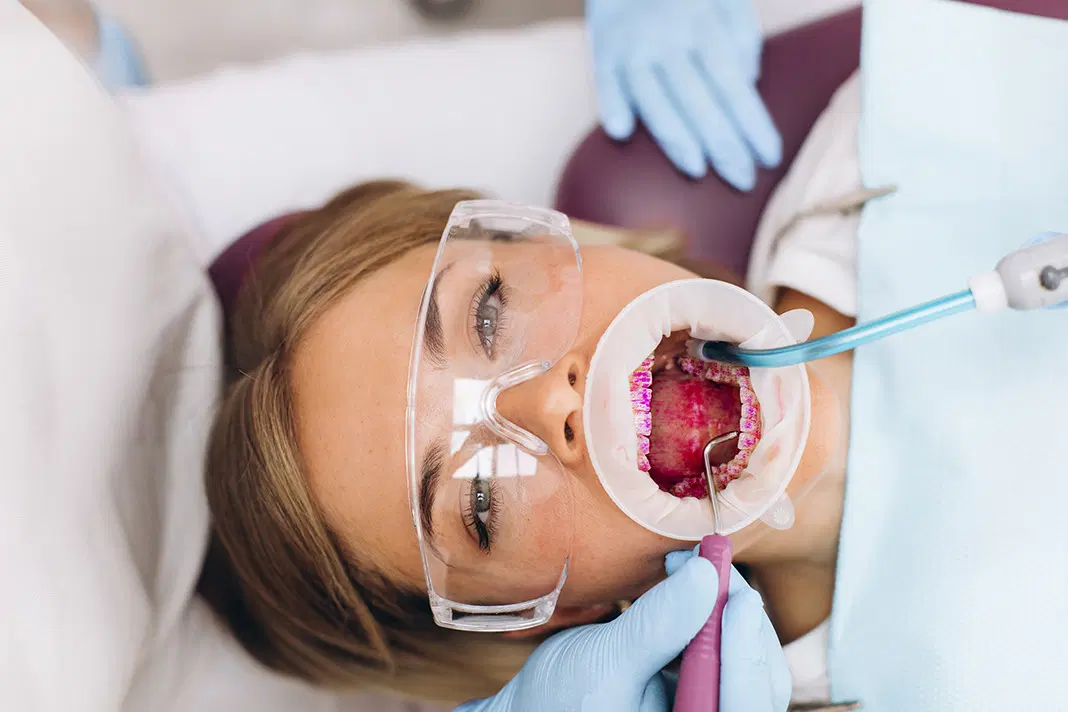
This is exactly why Guided Biofilm Therapy (GBT) is attracting so much interest. At GBT Clinic by Dr.Duro, GBT represents a more modern way to approach oral hygiene, especially for patients who want a gentler and more comfortable experience. Official EMS materials describe GBT as an evidence-based, minimally invasive protocol for prevention and maintenance, while EMS device information emphasizes patient comfort in both AIRFLOW and PIEZON systems.
Why Sensitive Teeth Make Dental Cleaning More Difficult
Sensitive teeth usually happen when the inner layer of the tooth, called dentin, becomes more exposed. This may happen because enamel has worn down, or because gums have receded and exposed the root surface. Mayo Clinic explains that tooth sensitivity can happen due to worn enamel or exposed tooth roots, while the Journal of the American Dental Association notes that gum recession can expose dentin and lead to hypersensitivity near the gum line.
For those patients, traditional cleaning can feel especially uncomfortable. Manual scraping, cold water, pressure, and contact with exposed root areas may trigger the short, sharp pain that sensitive-teeth patients already know too well. Sensitivity can also be made worse by factors like gum disease, erosion, or even aggressive brushing habits that contribute to recession over time.
That is why the cleaning method matters. Patients with sensitivity do not just need a thorough result. They need a hygiene experience that respects vulnerable tooth surfaces and irritated gum areas while still effectively removing the bacterial deposits that can lead to future oral health problems.
What Makes GBT Different for Sensitive Teeth?
Guided Biofilm Therapy is not just another polishing appointment. It is a structured hygiene protocol focused on identifying and removing biofilm in a more targeted and minimally invasive way. EMS presents GBT as the core of modern prophylaxis, and its system is designed to improve both clinical efficiency and patient comfort.
For sensitive patients, the biggest difference is that GBT is designed to reduce unnecessary harshness. Instead of beginning with aggressive scaling across the whole mouth, the clinician identifies where biofilm is present and then removes it with technologies designed for precision and comfort. This matters because sensitive teeth often react badly to treatments that are too forceful or too generalized.
At GBT Clinic by Dr.Duro, this makes GBT treatment for sensitive teeth an especially appealing option for patients who have avoided hygiene appointments because of fear or discomfort.
1. Less Scraping, More Comfort
One of the main reasons people with sensitivity dread professional cleaning is manual scraping. The sound, the sensation, and the pressure can be unpleasant even for patients without exposed dentin. For sensitive patients, it can feel much worse.
GBT changes that experience by relying heavily on AIRFLOW technology to remove biofilm and surface stains in a gentler way. EMS describes AIRFLOW systems as part of the GBT protocol and positions them around efficiency, safety, and comfort. PIEZON is then used selectively when hard deposits need removal, rather than making scraping the main event of the cleaning.
This means many patients experience the treatment as smoother and less stressful than conventional methods. While some calculus may still require instrumentation, the overall feeling is often far more manageable for sensitive mouths.
2. Better Tolerance for Sensitive Areas
Patients with exposed root surfaces or receding gums often feel discomfort when instruments pass over these areas. Since sensitivity is strongly linked to exposed dentin and gum recession, treatments that reduce unnecessary trauma are especially valuable. The ADA’s JADA sources specifically connect hypersensitivity with exposed dentin and receded gums.
Because GBT is indication-oriented, it allows clinicians to work more precisely. Instead of treating every surface as if it needs the same intensity, the process can be adapted to the patient’s actual needs. That is one reason why GBT at GBT Clinic by Dr.Duro fits so well for patients who want thorough hygiene without feeling that the treatment is “too much” for their teeth.
3. Precision Through Biofilm Disclosure
A major advantage of GBT is that it begins by making biofilm visible. This is important because it changes cleaning from a blind routine into a guided process. Once biofilm is disclosed, both the clinician and the patient can clearly see where the bacterial layer is present and where attention is needed. EMS presents this guided approach as part of the systematic nature of GBT.
For sensitive teeth, this matters because precision helps avoid unnecessary abrasion. If the clinician knows exactly where the problem is, treatment can be more focused. That is particularly useful for patients who already have delicate gum margins, worn enamel, or exposed root surfaces.
4. Support for Better Oral Health Over Time
Sensitive teeth are often not just about discomfort. They may also be a sign that the mouth needs better protection and maintenance. Gum recession, decay, erosion, and plaque accumulation can all contribute directly or indirectly to sensitivity. Mayo Clinic notes that cavities, gum disease, and worn restorations can also be associated with sensitivity symptoms.
This is where GBT becomes more than just a comfortable cleaning. By focusing on effective biofilm removal, it supports healthier gums and cleaner tooth surfaces. Better control of biofilm means a lower burden of harmful bacteria in the mouth, which may help reduce the risk of issues that can worsen sensitivity over time. EMS also promotes strong patient satisfaction and recall performance around the GBT model, reinforcing its value in preventive maintenance.
5. Designed to Be Gentle on Tooth Structure
Patients with sensitive teeth are often worried that repeated cleanings will wear their teeth down even more. While professional care is important, that concern makes sense when the patient already feels vulnerable.
GBT is attractive because its philosophy is minimally invasive. EMS describes the protocol as designed for prevention and maintenance with respect for tooth structures, soft tissues, and restorations. PIEZON technology is also promoted for high precision and dynamic power response aimed at comfort.
That makes Guided Biofilm Therapy for sensitive teeth a strong option for patients who want an effective cleaning while feeling that their enamel, roots, and restorations are being treated with greater care.
GBT vs Traditional Cleaning for Sensitive Teeth
The clearest difference between GBT and classic cleaning for sensitive patients is the overall feel of the appointment.
With traditional cleaning, the experience may involve hand scaling, cold water, pressure, and generalized scraping. For many patients that is fine, but for others it can trigger discomfort during and after the appointment.
With Guided Biofilm Therapy, the treatment is more systematic and comfort-focused. Biofilm is identified first, then removed with modern technologies that prioritize precision and a minimally invasive approach. Hard deposits are still addressed, but they are handled within a broader protocol rather than dominating the whole experience. EMS materials consistently position this as a modern, patient-friendly standard.
For a patient with sensitivity, that difference can be huge. It can turn hygiene visits from something they avoid into something they can tolerate much more comfortably.
Who Can Benefit Most?
GBT may be especially useful for patients who:
experience sensitivity to cold, touch, or pressure
have gum recession or exposed root surfaces
feel anxious about traditional scaling
want a gentler approach to preventive dental care
have restorations, implants, or other areas needing careful maintenance
Sensitive teeth are not always caused by the same issue, so the right treatment always begins with a proper dental assessment. But for many patients, GBT treatment at GBT Clinic by Dr.Duro can offer a more comfortable path to regular hygiene care.
Helping Sensitive Patients Feel More Confident About Dental Visits
One of the most important benefits of GBT is psychological as much as clinical. Patients who expect discomfort often delay cleanings. But the longer preventive care is delayed, the more likely it becomes that plaque, tartar, inflammation, or decay will develop further. Mayo Clinic notes that good dental visits and regular hygiene are key ways to reduce the risk of decay and other oral problems.
By making professional cleaning feel more manageable, GBT may help sensitive-teeth patients return more regularly for maintenance. That is a major long-term advantage. Prevention only works when patients are willing to come back.
Final Thoughts
If you have sensitive teeth, professional hygiene should not feel like something to fear. Guided Biofilm Therapy offers a more modern and patient-friendly approach by focusing on biofilm removal in a way that is more precise, minimally invasive, and comfort-oriented. Official EMS sources position GBT as an evidence-based preventive protocol, while broader dental and medical sources confirm that sensitive teeth are commonly linked to worn enamel, exposed roots, gum recession, and other conditions that benefit from careful ongoing care.
At GBT Clinic by Dr.Duro, we see GBT as an excellent option for patients who want a gentler dental cleaning without compromising on effectiveness. For sensitive smiles, that combination matters.